E-invoicing has evolved far beyond simple digitization of paper invoices. In 2025, it is a cornerstone of global business transformation, driven by regulatory mandates, technological advances, and the urgent need for operational agility. To truly understand why e-invoicing is indispensable today, we need to explore its nuanced mechanics, emerging global trends, and strategic business impacts that go well beyond conventional explanations. 🌍⚙️
With SmarteIS from Skill Quotient Technologies , businesses can enjoy a seamless invoicing experience that combines user-friendly design, automation, customization, integration, compliance, and insightful analytics—all in one powerful solution.
Book a DemoE-invoicing is the electronic generation, transmission, and processing of invoices in a structured, standardized format that enables automated validation and integration with tax authorities and business systems. Unlike PDFs or scanned copies, e-invoices contain machine-readable data that tax authorities can verify in near real-time through Continuous Transaction Controls (CTCs). This means invoices are not just digital copies but digitally “cleared” documents that comply with tax rules before payment processing. 💻📑
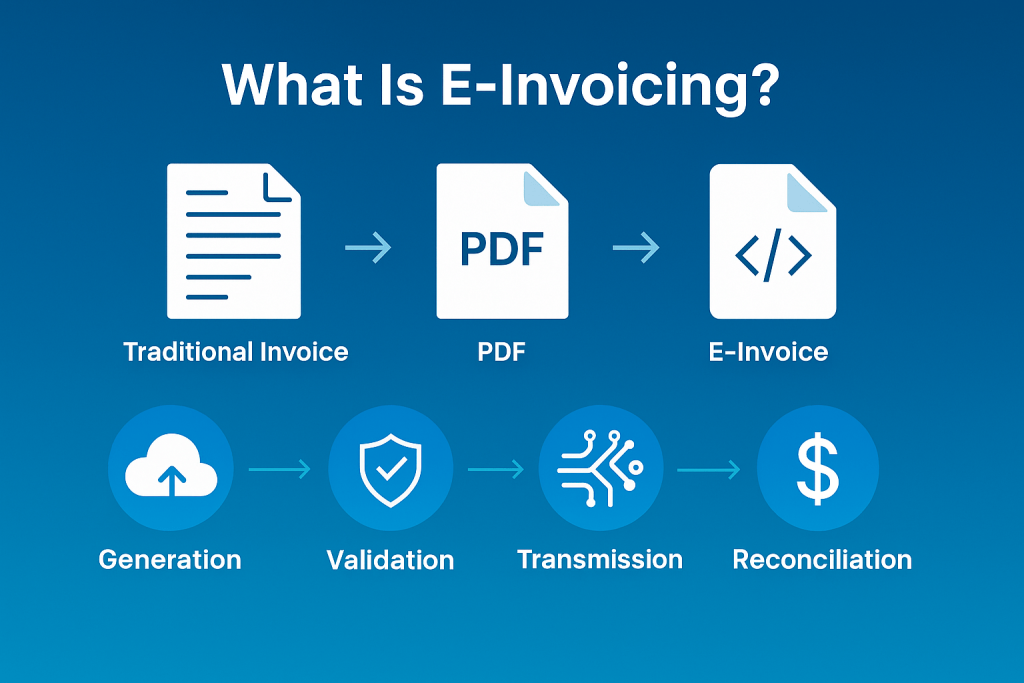
The e-invoice lifecycle now typically involves:
Automated Reconciliation 🤖: AI-driven tools automatically match invoices with purchase orders and payments, flagging discrepancies instantly.
| Feature / Aspect | Traditional Invoicing 📝 | E-Invoicing (2025) 🚀 |
|---|---|---|
| Format | Paper or PDF (unstructured) | Structured, machine-readable digital format |
| Validation | Manual, post-transaction checks | Real-time automated validation with tax authorities |
| Processing Speed | Slow, manual data entry and reconciliation | Instant processing with AI and automated matching |
| Compliance | Periodic, manual tax reporting | Continuous Transaction Controls (CTCs), real-time compliance |
| Cross-border Use | Complex, multiple formats & regulations | Interoperable standards (e.g., Peppol) for seamless global trade |
| Error Handling | Prone to errors, manual corrections | AI-driven anomaly detection and error flagging |
| Cash Flow Management | Delayed visibility, longer DSO | Real-time visibility, dynamic cash flow optimization |
| Environmental Impact | High paper usage, carbon footprint | Paperless, eco-friendly, supports ESG goals |
| Cost Implications | Higher processing and storage costs | Reduced operational costs via automation |
| Audit & Fraud Control | Retrospective audits, limited fraud detection | Real-time transparency, fraud prevention with AI |
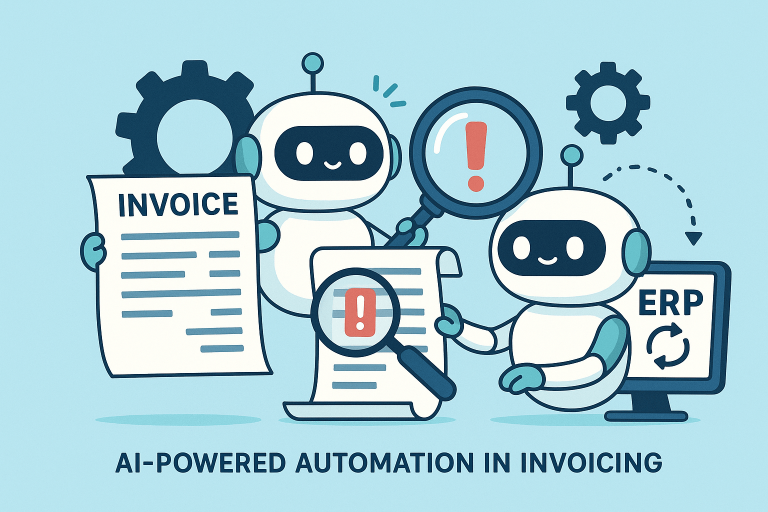
E-invoicing in 2025 is not just a compliance checkbox but a transformative enabler of digital finance, operational efficiency, and global trade competitiveness. Its integration with AI, real-time tax reporting, and cross-border standards is reshaping how businesses manage cash flow, compliance, and supplier relationships.
To stay ahead, businesses must embrace e-invoicing as part of a broader digital transformation strategy—leveraging its capabilities to reduce costs, mitigate risks, and unlock new growth opportunities in an increasingly interconnected and regulated global economy.
In essence, e-invoicing is the financial backbone of the future, turning invoicing from a manual chore into a strategic, automated, and intelligent process essential for any business aiming to thrive in 2025 and beyond. 🌟
Skill Quotient Technologies © 2025. All rights reserved.
Ask about Smarteis